
How Hormonal Imbalance Impacts Your Skin - and How to Fix It
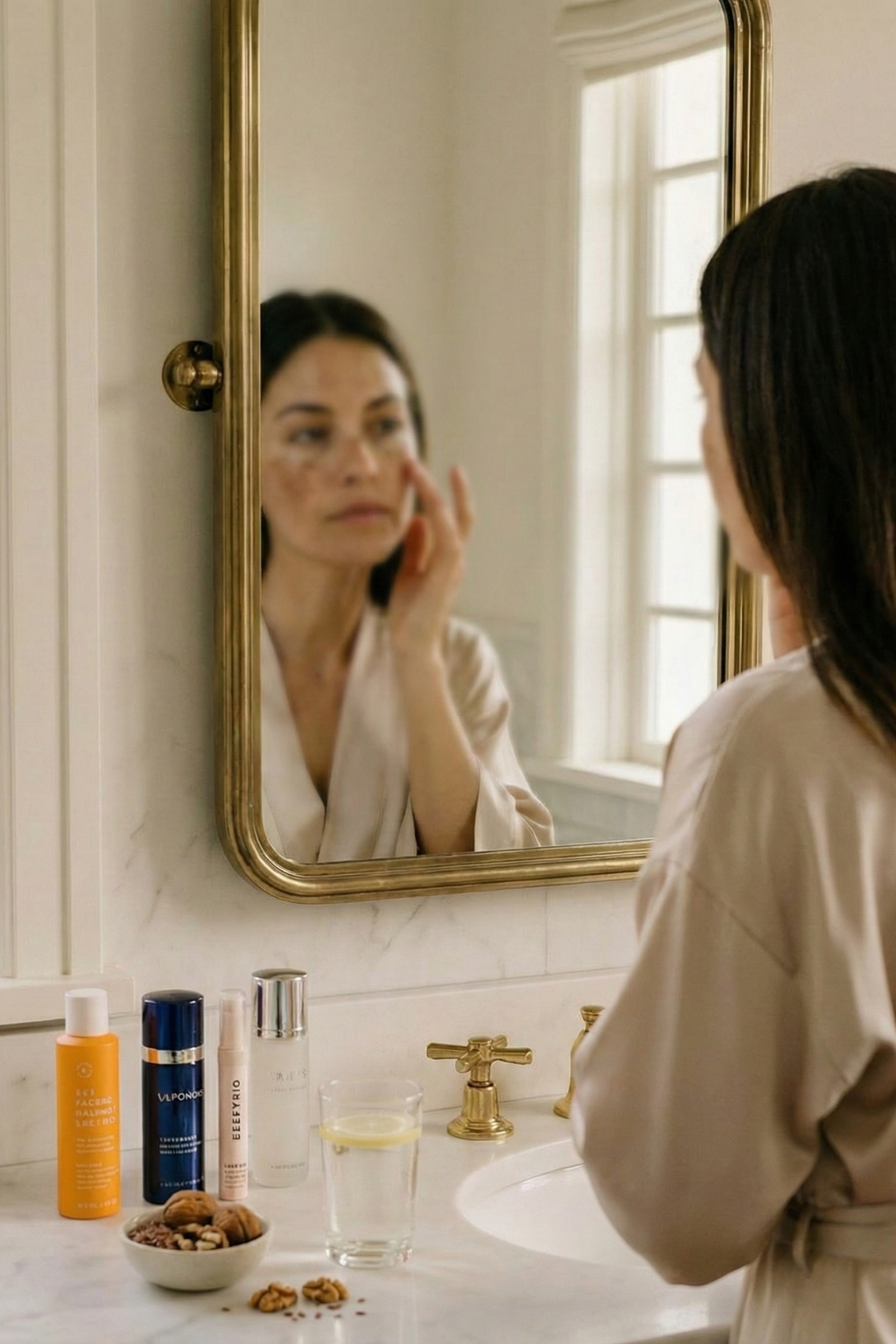
Your skin is talking to you.
Do you ever look in the mirror and wonder why your skin feels different lately? Maybe it's less glowy, more breakouts, and random dryness.
Then the culprit is not “Just Age.”
It's your HORMONES trying to start a conversation. Skin is not a beauty organ. It’s an endocrine organ that's rich in receptors for estrogen, cortisol, insulin, and thyroid hormones.
Every time those levels shift, your skin’s texture, tone, and even scent shift with them. Every hormonal fluctuation, every late-night stress, every skipped meal leaves an imprint. When your hormones drift out of rhythm, your skin reflects that imbalance.
To bring your skin back into harmony, you have to go deeper than creams and serums. Instead, focus on nurturing the chemistry beneath.
Hormones Behind Your Skin’s Story
Skin is a canvas, and what you consume clearly shows on it. So let's decode the core messengers influencing your skin’s texture, tone, and vitality.
Estrogen - The Collagen Keeper
Estrogen isn’t just about fertility; it’s a full-body sculptor. It binds to receptors in fibroblasts, the cells that produce collagen and elastin. When estrogen levels fall, those fibroblasts slow their work, collagen fragments faster, and skin begins to thin.
But is that all?
No.
Low estrogen also decreases glycosaminoglycans (the molecules that hold moisture like sponges), making skin feel dry and fragile.
You’ll see it as dullness, fine lines, or even a sudden loss of that “inner plump.”
You’ll feel it as sensitivity, especially around ovulation or perimenopause.
Low estrogen not only thins facial skin it also affects vaginal tissue, circulation, and natural lubrication. Many women report that when their skin feels drier, their desire does too. It’s not separate; it's the same chemistry, mirrored.
Support It Holistically
Phytoestrogens (from flax, sesame, pomegranate) gently modulate estrogen receptor activity. Magnesium, B6, and healthy fats are cofactors in estrogen metabolism.
These are essential if you’re experiencing mood swings or skin dryness simultaneously.
Cortisol - Disruptor of Radiance
Cortisol is the most underestimated aging hormone.
When chronic stress keeps it elevated, the hypothalamic–pituitary–adrenal (HPA) axis suppresses reproductive hormones.
Less Estrogen & Less Progesterone = More Dryness + Acne + Uneven Skin Tone
But it doesn't stop there.
Cortisol also directly shrinks collagen-producing fibroblasts and increases sebum oxidation. That's why stress-induced breakouts are angrier, slower to heal, and often occur along the jawline (a hormonally sensitive area).
Biologically, high cortisol also shifts blood flow away from the skin toward internal organs. It literally drains color from your face.
And sexually, it flattens libido by suppressing oxytocin and testosterone. The very hormones that make skin flush, eyes bright, and touch feel electric.
Restore It Through Rhythm
Cortisol should rise in the morning and fall by night. If it stays flat or reversed, you’ll feel wired but tired.
Try early light exposure, protein in your first meal, and a 2-minute parasympathetic reset (slow breath, no screens) in the evening.
For deep adrenal nourishment, shilajit is exceptional. It supports mitochondrial repair and cortisol regulation.
Use code SYDNEY10 at Cultivate Elevate for therapeutic blends I trust. Because purity matters when you’re working with your endocrine system.
Insulin - The Collagen Caramelizer
Every time insulin spikes, sugar molecules attach to collagen fibers, a process called glycation. This “caramelizes” the skin’s structure, making it stiff and uneven. Glycated collagen doesn’t reflect light; instead, it absorbs it, leading to dullness.
But insulin also cross-talks with androgens. In women, high insulin triggers the ovaries to make more testosterone, which can lead to cystic acne, hair growth, and oily skin. This hormonal imbalance is often mislabeled as “adult acne.”
Support It Metabolically
Eat your carbs after protein and fiber. Get morning sunlight (it enhances insulin sensitivity).
Add cinnamon, chromium, or berberine to stabilize blood sugar post-meal. This isn’t about restriction; it’s about rhythm. Teach your body how to dance with glucose again.
Thyroid - Hidden Sculptor of Texture
Your thyroid hormones (T3 and T4) dictate cellular turnover. This is what happens when their levels are low.
Low T3 & T4 → Skin Cell Renewal Slows → Roughness → Dryness → Even Hair Shedding
Thyroid hormones also stimulate hyaluronic acid synthesis, which is why women with hypothyroidism often say their skin feels “flat.”
On the flip side, if the thyroid is overactive, you may experience flushed, oily, or fragile skin.
Nourish The Thyroid Axis
Selenium (Brazil nuts), iodine (seaweed), and zinc (pumpkin seeds) are cofactors in thyroid hormone production. Shilajit provides fulvic minerals that enhance mitochondrial energy.
Rituals for Hormone-Friendly Skin
Hormone harmony doesn’t begin in your vanity cabinet; it starts in your daily rituals. Here's what you need to do:
Eat with intention. Your hormones need fat, fiber, and protein, not restriction. Think salmon, avocado, seeds, and greens.
Sleep Like It’s Sacred. Growth hormone peaks during deep sleep, your body’s built-in retinol.
Move To Circulate, Not Deplete. Over-exercising raises cortisol. Instead, try Pilates, walking, or low-intensity strength work to balance stress hormones and lymph flow.
Reclaim Stillness. Skin thrives when your nervous system does.
Advanced (But Gentle) Tools for Hormonal Radiance
Once your basics are in sync, advanced therapies can amplify the body’s own intelligence.
Peptides: Support collagen renewal and barrier repair, especially during low-estrogen phases.
Red Light Therapy: A gentle, non-invasive boost for cellular energy and inflammation control.
Adaptogens: Herbs like shilajit, reishi, and chaga help your body adapt to stress, stabilize cortisol, and support hormonal equilibrium.
If you’re exploring high-quality adaptogens or natural hormone-supportive blends, look for therapeutic-grade formulations.
3-Step Weekly Ritual to Sync Skin with Hormones
To truly align your beauty with biology, anchor your week in small but powerful rituals:
Sunday Reset
Hydrate, meal-prep hormone-supportive foods (salmon, greens, seeds), and do 10 minutes of fascia release or gua sha for lymphatic flow.
Wednesday Pause
Red light or an adaptogen moment works like a charm. So sip your shilajit tonic, breathe deeply, and release tension in the jaw, neck, and core.
Friday Reflection
Journal one thing your skin told you this week. Maybe it brightened when you rested, or dulled when you skipped meals. Awareness rewires behavior faster than discipline.
Hidden Beauty Secret: Hormones as an Ecosystem
When your hormones are balanced, your skin doesn’t just look clearer, it feels alive. There’s a softness, a brightness, a sense of inner safety that radiates outward.
Because when your body feels safe, it heals. And when it heals, it shines.
Your real beauty secret isn’t a serum, it's self-regulation. And that’s something every woman deserves to master.
Because the glow you’re chasing isn’t cosmetic. It’s biochemical peace.